Extraction, drying, storm cleanup, and moisture verification across Wilmington, the beach towns, and New Hanover County. Every scope in writing before equipment goes in.
Call (555) 555-5555Or call — we answer. No obligation, honest advice.
Wilmington sits between a river and an ocean, and water finds its way into buildings here from more directions than almost anywhere else in the state. Storm surge pushes in from the beaches, the Cape Fear backs up into low-lying streets, summer humidity works on crawlspaces all season, and an ordinary supply-line failure can quietly ruin a kitchen while the owners are at work. The cause matters, because the cause decides both the cleanup method and which insurance policy, if any, is going to pay for it.
That last point trips up more Port City homeowners than the water itself. Rising water from outside is a flood claim, which is a separate policy most people carry only if their lender required it. Water from a burst pipe, a failed water heater, or wind-driven rain through a damaged roof usually falls under a standard homeowners policy. A restoration scope written without that distinction in mind can leave you arguing with two insurers at once. Whoever you hire, ask them to document the water source in photos on day one.
Drying a house in Wilmington is not the same job as drying one in the Piedmont. The water table across much of New Hanover County sits close to the surface, so a crawlspace that took on water resists drying from below even after the visible water is gone. Coastal humidity slows evaporation for most of the year, which changes how long equipment genuinely needs to run.
The historic district adds its own rules. Plaster over lath and heart-pine flooring hold and release moisture differently than drywall and laminate, and ripping them out by reflex destroys value that careful drying could have saved. A good scope in an older home names which materials are being dried in place and which are coming out, and why.
Three kinds of work cover most of the calls that come from Wilmington and the surrounding towns.
Standing water out, wet materials opened up, drying equipment placed and monitored with meter readings until the structure actually reads dry rather than merely looks it.
Surge and rising-water cleanup after named storms and hard nor'easters, including contaminated-water precautions, debris-out, and documentation your flood adjuster will ask for.
Meter and thermal checks that find what the eye misses, and the drying or ventilation corrections that keep a wet event from becoming a mold problem later.
Water damage is a clock. Materials that could have been dried on Monday are demolition by Friday, and the price difference between those two outcomes is usually several times the cost of acting quickly. The timeline below is the honest version of how a wet building ages.
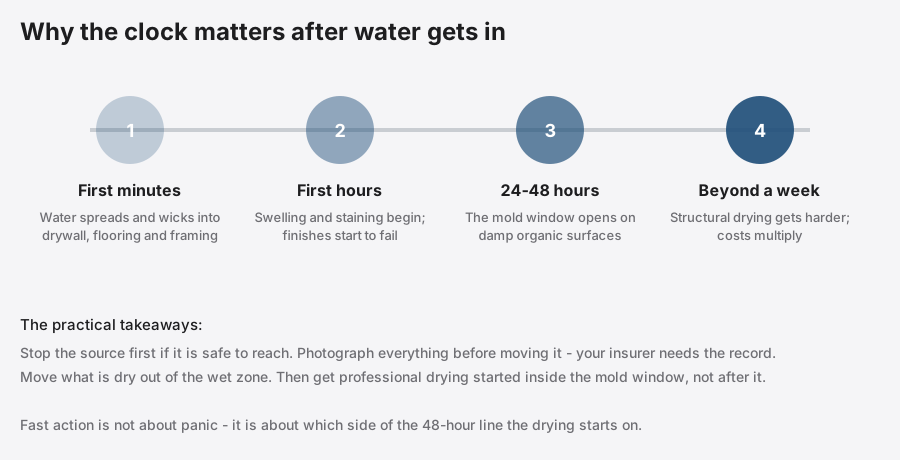
If the water came from inside, close the main shutoff; most Wilmington homes have it at the meter box near the street or where the line enters the crawlspace. Kill power to affected rooms at the panel if outlets or cords are wet. Move what you can to dry ground, and photograph everything before you touch it, including the water line on the walls. Those photographs are worth real money in the claim process.
If the water rose from outside, treat it as contaminated. Surge and river water in this county carries whatever it crossed on the way in. Keep children and pets out of it, do not run the HVAC system through soaked ductwork, and let cleanup crews handle material that soaked in it. Gloves and washed hands are the minimum, not caution theater.
The claims process rewards owners who document early and describe the loss precisely. Before you call your carrier, know three things: what the water source was, when it started as best you can establish, and which rooms and materials it touched. Photograph the source itself, not just the wet floor. When the adjuster asks how it happened, plain facts beat guesses; a wrong guess recorded in the claim file can haunt the payout. And keep every receipt from the first day, including fans you bought and the hotel night, because reasonable mitigation costs are commonly reimbursable.
One more habit that pays: keep your own copy of everything the restoration company generates - the moisture map, the equipment log, the readings at sign-off. If a dispute surfaces months later about whether the structure was properly dried, that file is your evidence, and companies that measure honestly are glad to hand it over.
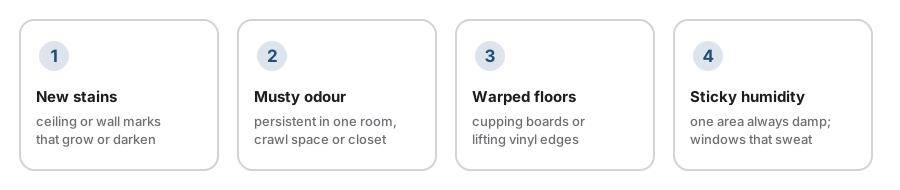
Plenty of Wilmington houses have a wet history nobody disclosed. These are the signals worth acting on before the repair gets bigger.
Wilmington gets a wave of out-of-town operators after every named storm. However you found a company, including this site, put them through the same checks.
Line items for extraction, removal, equipment days, and monitoring visits. A verbal number shouted over fans is not a scope.
Ask for the moisture readings at the start and the finish. Dry is a measurement, not a feeling.
They should tell you plainly whether your loss looks like a flood claim or a homeowners claim, and document the source accordingly.
An address and history in the area matter in a market that floods. Storm-chasing crews are gone before the punch list is.
Restoration pricing in this market runs on equipment days and affected square footage, and honest companies will show the math. Small contained losses are often a few days of drying. Whole-floor losses after a storm are a different animal, and anyone quoting a firm total before moisture mapping is guessing with your money. What you should expect from the first conversation: what is wet, what stays, what goes, what it costs to find out for sure.
A large share of the properties from Carolina Beach up through Wrightsville belong to owners who live somewhere else, and water losses in those houses follow a cruel pattern: nobody notices for weeks. A supply line that fails on a Tuesday in an occupied house is a bad afternoon; in an empty beach rental it is a saturated building by the time the cleaner opens the door. If you own at a distance, three cheap habits change the math entirely. Shut the water off at the main whenever the house sits empty for more than a few days. Put inexpensive leak sensors under the water heater, washing machine, and each bathroom vanity, wired to your phone. And have one local person, a neighbor or a property manager, who will walk the house after any hard storm and text you what they see.
When a loss does happen in an unoccupied property, tell whoever you hire that timeline honestly. Water that sat for three weeks is a different cleanup category than water from last night, and a crew that scopes it as a fresh loss is either not paying attention or planning to find the rest of the problem later, on a change order.
Calls come from the whole county and the towns around it: downtown and the historic district, the beach communities from Carolina Beach up through Wrightsville, and the fast-growing neighborhoods across the river in Leland.
Wilmington and New Hanover County, plus the near side of Brunswick and Pender counties.
This city has been through enough hurricanes that most owners know the drill, but the flooding pattern keeps changing as the area builds out. Streets that stayed dry in one storm pond in the next because the drainage upstream changed. If your house took water once, treat that as information about the lot, not a one-off. Grading, gutter discharge, and crawlspace ventilation are cheap compared to a second cleanup.
If you have water in the house right now, call. If you are staring at a stain, a smell, or a buckled floor and want to know how bad it is before anyone sells you anything, that is a reasonable way to start too.
Tell us what you need and we'll get back to you with a real answer. If it's an active backup or standing water over the field, calling gets you a faster response.
Call: (555) 555-5555
Area: Wilmington, NC and New Hanover County